
GET TO KNOW US
Meet Liam

Liam

Liam's Story
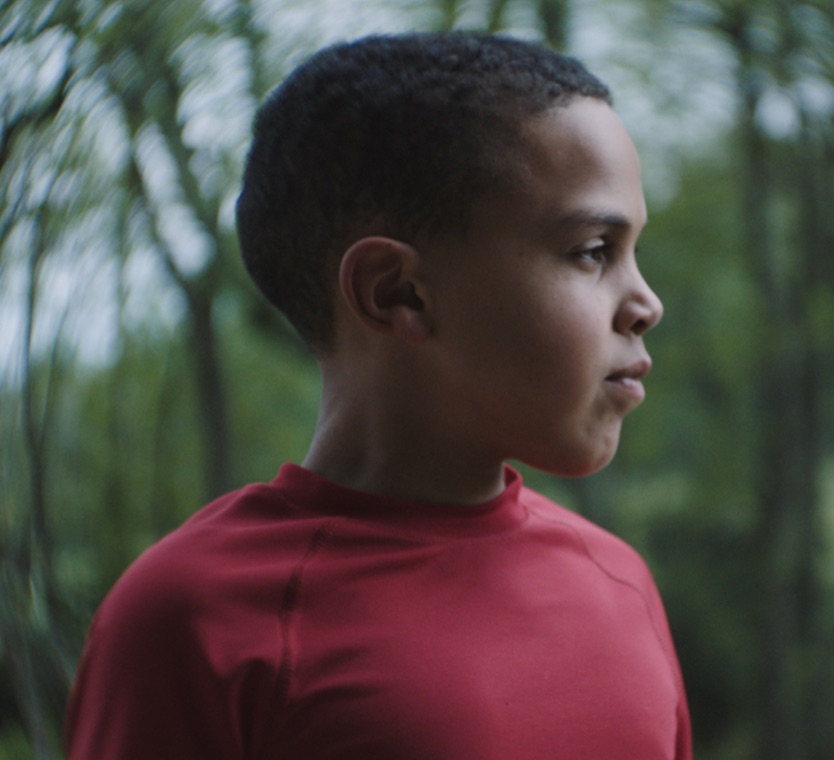
Born and raised in Atlanta, Liam is our happy, social, Boston-sports-loving 16 year old who also lives with Hunter syndrome. He is tough and resilient, funny, and kind. He loves his family, his friends, and saying hi to everyone in the grocery store. Liam doesn’t know a stranger. If you meet him in an elevator, you will be holding hands by the time you get off. Liam is interested and curious about the world around him. He loves talking to people, almost as much as he loves talking to his “brother dog,” Murphy.
Liam was diagnosed in February 2013 with Hunter syndrome, a progressive, regressive, life-limiting genetic disorder that causes cellular-level degeneration, especially in organs, including the brain. We knew something was not right with Liam after his first birthday, though we attributed it to very bad allergies. He had a chronic runny nose, so bad that whenever we went out with him, people would comment without fail that he needed a tissue. It didn’t seem like a big deal, but it continued endlessly. The pediatrician sent us to an ENT who suggested antihistamines and nasal sprays. A year later, at age two, his symptoms were unchanged, and also the ENT found his adenoids were huge. Again, nothing earth shattering. By the time he had adenoids surgery, Liam was almost two and a half years old. During surgery, the ENT came out to talk to us. First, he said Liam’s tonsils were also huge and needed to come out. Then he asked if Liam had ever seen a geneticist. Intubating Liam during surgery was extremely difficult and the team noticed cranio-facial abnormalities.
The weeks following surgery were horrible as we waited to get an appointment with genetics, and finally a diagnosis. We were told Liam would most likely not live past his late-teens. Given the lack of approved treatments at the time, we decided upon a bone marrow transplant to get properly functioning cells into his body and potentially improve his cognitive trajectory. His sister, Darcy, was his donor, and he spent a year in isolation in recovery.
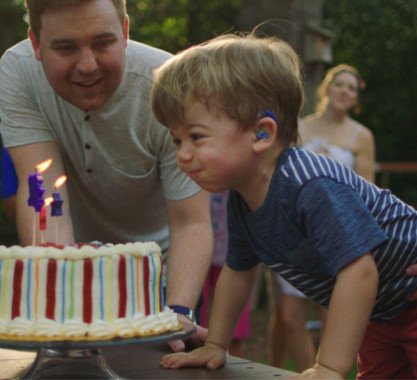
After Liam’s transplant and the year of recovery, he returned wholeheartedly to life. He went to school with his peers, he played sports, and he enjoyed friends and family. As he aged, despite the transplant, he slowly fell behind developmentally, and it became harder to participate in every way alongside his peers. While he can still do many things, life with Hunter syndrome means adaptation: adaptive learning, adaptive sports, adaptive clothing, adaptive communication, adaptive traveling. Every system in Liam’s body has been affected. While he walks, he has pain with longer distances, while he talks, he often does not speak meaningfully, while he hears, it is only with hearing aids within 8 feet, while he still learns, he also forgets what he has learned. One thing that hasn’t changed though, is Liam’s enormous and contagious smile and great sense of humor.
We are excited that Liam has been able to start the new FDA approved treatment for Hunter syndrome that reaches the brain. We have always hoped for a cure, but even if a cure can’t reverse damage that has been done, we hope that treatments such as this can preserve a meaningful life for Liam.
Anne, Liam's mom


